English
 Deutsch
 España
 Français
 Italia
 Русский
 عربي
عربي


A self-closing safety gate works through a spring-loaded or gravity-based hinge mechanism that automatically pulls the gate back into a closed and latched position after someone walks through it, without requiring the user to manually swing it shut. This mechanism is what separates safety gates from ordinary gates, since a person distracted by a child, pet, or task never needs to remember to close it themselves. Below, we explain exactly how the closing mechanism functions, the different design types used across the industry, and how to choose a self-closing safety gate suited to your specific application.
The Core Mechanism Behind Automatic Closing
Most self-closing safety gates rely on a spring-tensioned hinge, where the hinge barrel contains a coiled spring that is compressed slightly whenever the gate is pushed open. Once released, the stored energy in the spring pulls the gate frame back toward the closed position, and a latch or magnetic catch engages automatically to hold it shut.
According to product safety testing guidance referenced by organizations such as ASTM International, self-closing gates used around pools and stairways are required to close and latch automatically from any open position, including a fully open 90 degree swing, without needing a final push from the user. This is a critical distinction from simple spring hinges found on screen doors, which often fail to latch if released only partway open.
Spring Hinge vs Gravity Hinge Designs
There are two primary mechanical approaches used to achieve automatic closing, and each has different performance characteristics depending on the installation.
| Mechanism Type | How It Closes | Best Use Case |
|---|---|---|
| Spring hinge | Coiled spring tension pulls gate shut from any angle | Pool fencing, stairways, uneven surfaces |
| Gravity hinge | Angled hinge pin uses gate weight to swing shut | Level ground installations, garden gates |
Spring hinges are generally preferred for child safety and pool applications because they generate consistent closing force regardless of how the gate was opened, while gravity hinges depend on the gate being installed perfectly level, since any tilt in the mounting post can prevent the gate from swinging shut on its own.
The Latching Component and Why It Matters
The closing motion alone does not make a gate safe, the latch mechanism is equally important. Most self-closing safety gates use a spring-loaded latch bolt that automatically extends into a strike plate as the gate reaches the closed position, creating a positive mechanical lock rather than relying on friction or magnetism alone.
Self-latching versus self-locking
A self-latching gate closes and secures itself but can still be opened by anyone who pushes or pulls it. A self-locking gate goes a step further, requiring a key, combination, or release mechanism positioned out of reach of small children, which is why many child safety standards specifically require the release mechanism to be located at least 3 inches below the top of the gate on the opposite side from where a child would stand.
Step by Step: How the Gate Closes After Use
- A person pushes the gate open, compressing the internal spring within the hinge barrel or, in gravity hinge designs, lifting the gate slightly against its own weight.
- Once the person releases the gate, the stored spring tension or gravitational pull begins returning the gate toward the closed position.
- As the gate approaches the frame, the latch bolt contacts the strike plate and compresses slightly before snapping into the catch opening.
- The gate comes to rest in the fully closed and latched position, requiring no further action from the user.
This entire sequence typically completes within a few seconds, which is fast enough to prevent a young child or pet from following an adult through the opening before it closes.
Common Applications Where This Mechanism Is Required
- Residential pool enclosures, where many regional building codes mandate self-closing and self-latching gates as a legal requirement for pool barriers.
- Stairway top and bottom openings in homes with young children, preventing falls when an adult forgets to manually close a standard gate.
- Industrial mezzanine and platform edges, where workers need hands-free closure after passing through to maintain fall protection compliance.
- Playground and daycare perimeter fencing, where consistent closure prevents children from wandering outside a supervised area.
Testing and Adjustment for Reliable Operation
Even a well-designed self-closing safety gate can fail to close properly if not adjusted correctly after installation. Most spring hinges include a tension adjustment screw that allows the closing force to be increased or decreased depending on the gate's weight and the frequency of use.
Manufacturer testing guidelines typically recommend verifying that the gate closes and latches from a fully open position at least 10 consecutive times without manual assistance before considering the installation complete. A gate that closes reliably from a small opening angle but fails from a full 90 degree swing has insufficient spring tension and poses a real safety risk.
Choosing the Right Self-Closing Safety Gate
Selecting the correct gate depends on the installation surface, the weight of the gate panel, and the level of security required.
- For pool areas, choose a gate rated to specific pool safety standards with a self-latching mechanism positioned out of a child's reach.
- For uneven or sloped surfaces, a spring hinge design is more reliable than a gravity hinge, which depends on level installation.
- For industrial platforms, prioritize a heavier-duty spring mechanism rated for frequent daily cycling without losing tension over time.
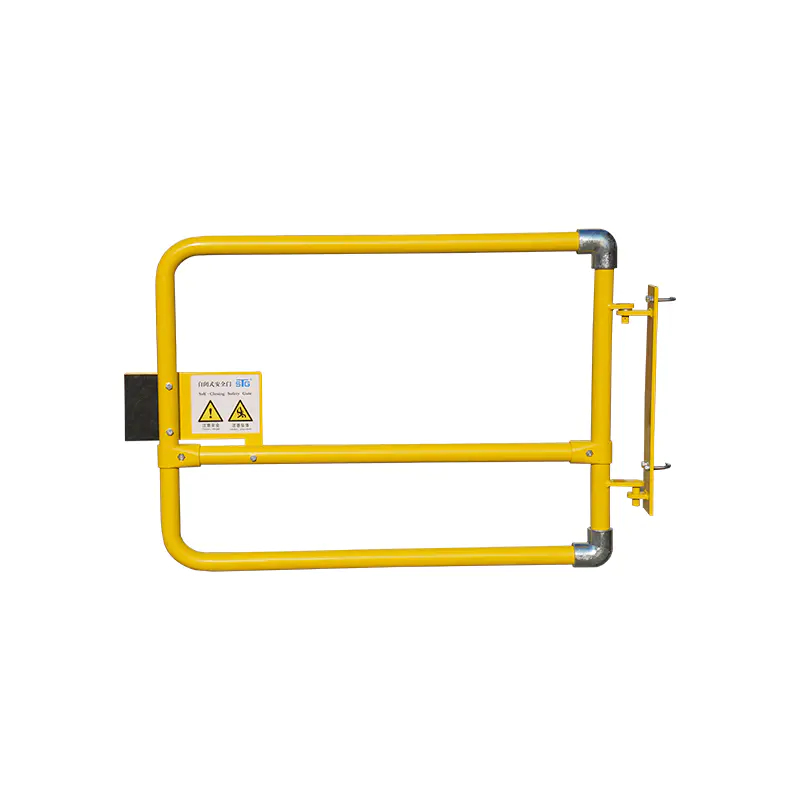
Our self-closing safety gate series uses a gravity-based self-closing mechanism, which reliably closes and secures the gate across various applications – from residential pool barriers to industrial platform access points. Compared with spring hinges, the gravity mechanism offers superior durability.