English
 Deutsch
 España
 Français
 Italia
 Русский
 عربي
عربي


A Detachable guardrail is a modular fall protection barrier that clamps, bolts, or pin-connects to a base plate or mounting bracket instead of being permanently welded to the floor or platform structure. In short: it is a guardrail you can remove, relocate, or reconfigure without cutting, welding, or damaging the underlying surface. This single feature is what separates it from traditional fixed guardrails and is the reason facilities managers, warehouse operators, and industrial contractors increasingly specify detachable systems for mezzanines, loading docks, rooftops, and machine perimeters.
Because the posts sit in a base that is bolted or clamped rather than welded, a detachable guardrail can be taken down in minutes when a forklift needs temporary access, when equipment needs to be lifted through an opening, or when a layout changes during a facility retrofit.
Core Components Of A Detachable Guardrail System
Most detachable guardrail systems share the same basic architecture, even though brands vary in finish and hardware style:
- Base plate or floor flange - bolted to concrete, steel decking, or a structural frame
- Removable post - slides or locks into the base plate, often secured with a pin or quarter-turn clamp
- Top rail and mid rail - horizontal members that provide the primary and secondary barrier
- Toe board or kick plate (optional) - prevents tools or debris from falling through the gap at floor level
- Locking hardware - pins, clips, or bolts that keep the post seated until intentionally released
The base plate stays permanently anchored, while the vertical post and rail assembly is the part that actually detaches. This design means the anchoring work only has to be done once.
How Detachable Compares To Fixed And Portable Guardrails
Facilities typically choose between three guardrail categories: fixed (welded), detachable (bolted post, removable rail), and portable (freestanding, weighted base). Each has a distinct use case.
| Type | Repositioning | Anchoring | Best Use |
| Fixed guardrail | Not possible without cutting | Welded | Permanent perimeter edges |
| Detachable guardrail | Minutes, no tools or light hand tools | Bolted base plate | Loading docks, mezzanines, machine access points |
| Portable guardrail | Instant, no anchoring | Freestanding weighted base | Temporary roof work, short-term projects |
Detachable guardrails sit in the middle: they provide the rigidity and load rating close to a fixed system, while still allowing the rail sections to come out when access is needed. This is why they are commonly chosen over portable rails in areas where consistent, code-compliant fall protection is required daily, but occasional full removal is still necessary.
Load And Height Standards That Apply
In the United States, guardrail systems used for fall protection are governed primarily by OSHA 1910.29. According to this regulation, a compliant top rail must be installed at a height of 42 inches, plus or minus 3 inches, above the walking-working surface, and the top rail must be capable of withstanding a force of at least 200 pounds applied in an outward or downward direction. Mid rails must withstand at least 150 pounds under the same test conditions (Source: U.S. Department of Labor, OSHA Standard 1910.29). A detachable guardrail is not exempt from these figures simply because the posts are removable; the base plate and locking hardware must be engineered to transfer that same force rating into the anchor point.
Facilities in material handling environments also frequently reference ANSI MH28.3, a standard specifically written for industrial guardrail systems used around mezzanines and elevated work platforms, which covers post spacing, rail diameter, and anchoring torque specifications.
When comparing suppliers, ask for the tested load rating of the base plate connection specifically, not just the rail material, since the connection point is typically the weakest link in a detachable system.
Where Detachable Guardrails Are Used In Practice
The removable nature of these systems makes them a practical fit anywhere access needs change on a regular basis:
- Loading dock edges, where the rail is removed while trucks are backed in and reinstalled once the dock plate is retracted
- Mezzanine and pick-module perimeters, where a section is opened for pallet drop zones
- Rooftop equipment access points, where technicians need a clear path to HVAC units
- Machine guarding perimeters, where maintenance crews need temporary full access to a press or conveyor line
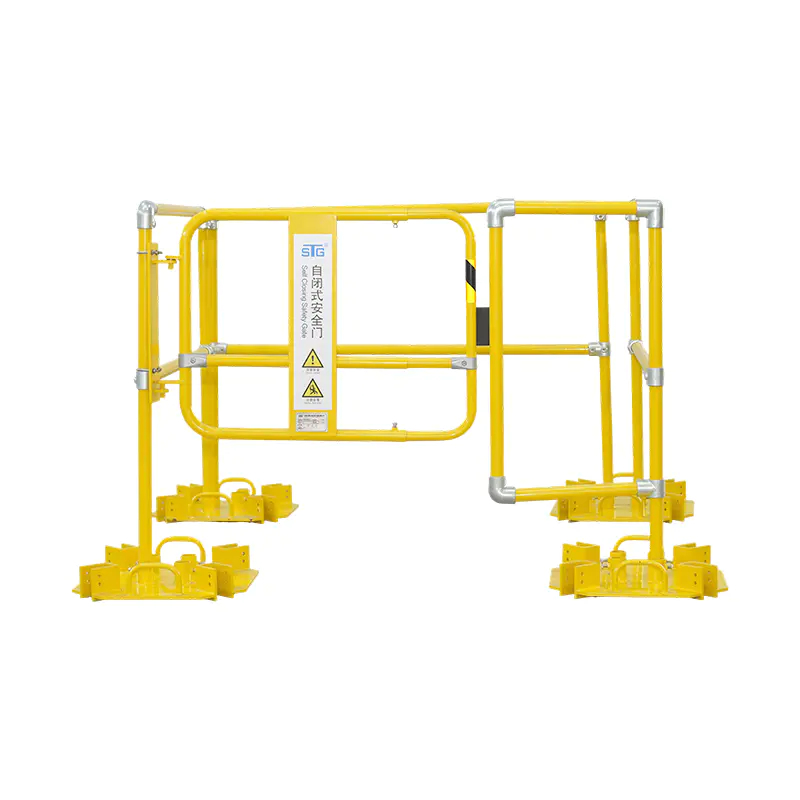
- Warehouse mezzanine gates, paired with a self-closing swing gate for daily pallet transfer
In a typical distribution center, a single dock door may cycle a detachable rail section in and out several times per shift. This is a scenario where a welded rail simply is not workable, and where a Detachable guardrail becomes the only realistic compliant option.
Materials And Finish Options
Detachable guardrail posts and rails are most commonly manufactured from one of the following:
- Galvanized steel - the most common choice for indoor industrial use, offering corrosion resistance at a moderate cost
- Powder-coated steel - adds a color-coded safety finish, often yellow or blue, which improves visibility on the floor
- Aluminum - lighter weight, useful where the rail sections are removed and reinstalled frequently by hand
- Stainless steel - selected for washdown environments such as food and beverage plants
Pipe diameter typically ranges from 1.5 to 1.9 inches for the top rail, matched to standard industrial guardrail fittings so that replacement sections remain compatible over time.
Installation Considerations
Because the base plate is the permanent element, correct anchoring at the outset determines how well the system performs for years afterward. A few practical points worth checking before installation:
- Confirm the slab or platform thickness is sufficient for the specified anchor bolt embedment depth
- Space posts according to the manufacturer's tested spacing, typically no more than 8 feet on center for standard-duty rails
- Torque anchor bolts to the specification provided with the base plate, since under-torqued bolts are a common cause of guardrail failure in the field
- Label removable sections clearly so that workers reinstall them correctly after temporary removal
Maintenance And Inspection Checklist
Because a detachable guardrail is designed to be removed and reinstalled, it needs a slightly different inspection routine than a welded rail. Recommended checks include:
- Visually inspect base plates for cracked welds or elongated bolt holes monthly
- Check that locking pins or clamps engage fully every time a section is reinstalled
- Test rail rigidity by applying moderate hand pressure and checking for excessive movement at the base
- Re-torque anchor bolts on a quarterly basis in high-traffic removal zones
Facilities that log removal and reinstallation events, such as at a dock door used dozens of times per week, tend to catch base plate wear far earlier than facilities relying on annual inspection alone.
Choosing The Right Detachable Guardrail Supplier
When selecting a system, the base plate connection, documented load testing, and finish options matter more than the rail appearance alone. STG Manufacturing's Detachable guardrail line is built around bolt-down base plates engineered for industrial floor loads, with rail and post assemblies that can be removed and reinstalled without special tools, making it a practical fit for loading docks, mezzanines, and machine perimeter applications that require both daily flexibility and consistent fall protection compliance.
Before finalizing a purchase, request the tested load rating documentation and confirm post spacing matches your specific platform layout, since these two factors have the largest impact on long-term safety and compliance.