English
 Deutsch
 España
 Français
 Italia
 Русский
 عربي



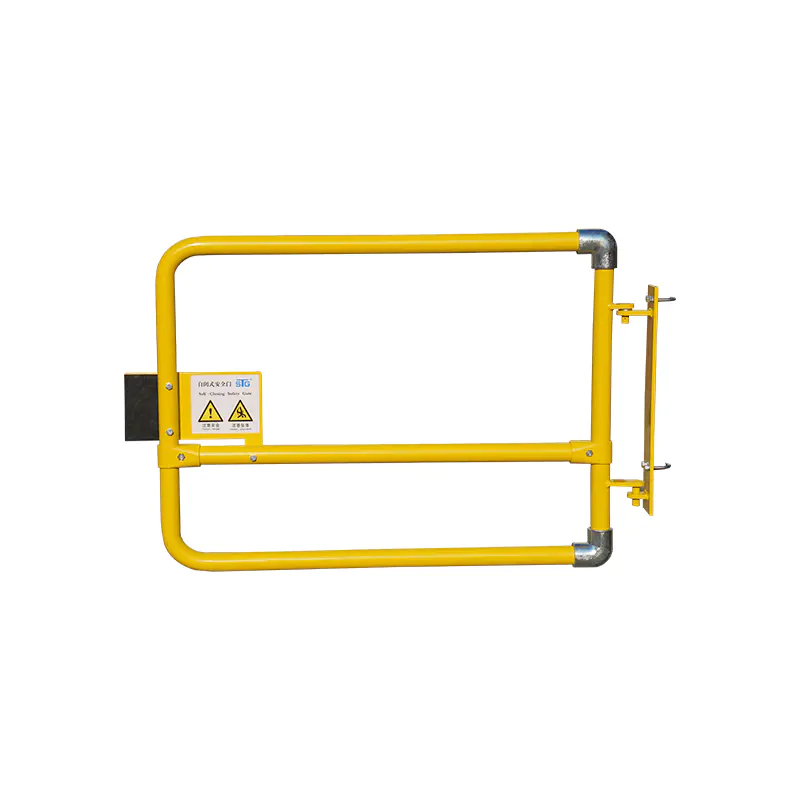
A self-closing safety gate is a movable barrier installed at an access opening in a guardrail system. It allows workers to enter or leave an elevated platform, ladder landing, mezzanine, or industrial work area while helping keep the opening protected when it is not in use.
Unlike a removable chain or manually operated barrier, a self-closing gate is designed to return to its closed position after a person passes through. This reduces the chance that an access opening will be accidentally left unprotected during routine work.
The main selection principle is simple: choose a gate that fits the opening, closes reliably, and works with the surrounding guardrail system. The gate should not obstruct normal movement, interfere with equipment, or create a new hazard during entry and exit.
For industrial facilities, a properly selected Self-closing safety gate can be used at frequently accessed openings where workers need convenient access without leaving the guardrail opening unprotected.
How a Self-Closing Safety Gate Works
A typical self-closing safety gate uses a hinge and a spring-loaded or gravity-assisted closing mechanism. When a worker pushes or passes through the gate, it opens to provide access. After the worker moves through, the mechanism returns the gate toward its closed position.
Main Components
- Gate frame: Forms the physical barrier across the access opening. Its dimensions should suit the opening and the surrounding guardrail arrangement.
- Hinges: Connect the gate to the supporting post or frame and allow controlled movement.
- Spring or closing mechanism: Provides the force needed to return the gate to its closed position.
- Mounting brackets: Secure the gate to the supporting structure. Their compatibility with the post and rail arrangement is important for stable operation.
- Protective rails or intermediate members: Help maintain continuity with the surrounding guardrail system.
Typical Operating Sequence
- The worker approaches the designated access point.
- The worker pushes or moves the gate to enter or exit.
- The worker passes through without needing to remove the gate.
- The closing mechanism returns the gate to its closed position.
- The worker or supervisor confirms that the gate has closed properly if the task or site procedure requires it.
Automatic closing should not be treated as proof that the opening is always protected. A damaged hinge, obstructed swing path, loose mounting bracket, or weakened spring can prevent complete closure. Regular inspection is therefore essential.
Where Are Self-Closing Safety Gates Used?
Self-closing safety gates are commonly considered for industrial access points where workers regularly move between a protected platform and another working level. The most suitable locations depend on the access arrangement, opening dimensions, traffic pattern, and applicable safety requirements.
Industrial Platforms and Mezzanines
Maintenance platforms and mezzanine floors often have access openings for personnel, tools, and equipment. A gate can help maintain a barrier at these openings when workers are not passing through. The gate should be positioned so that it does not interfere with nearby machinery, stored materials, or normal walking routes.
Fixed Ladder Access Points
At the top of a fixed ladder, workers may step onto a landing through an opening in the guardrail. This transition requires particular attention because the worker may be turning, changing body position, or handling tools. The gate should be easy to operate and should not force the worker to reach awkwardly or move into an exposed area.
Industrial Maintenance Areas
Production lines, processing facilities, and equipment maintenance areas may have elevated access platforms used for inspection, adjustment, and repair. A self-closing gate can provide controlled access while helping reduce the chance of an opening being left unattended.
Loading and Equipment Access Areas
Some loading areas require workers to enter platforms to operate equipment or handle materials. Gate selection should account for the movement of loads, handling equipment, and personnel. Where large materials pass through an opening, the access arrangement may require a different engineered solution rather than a standard personnel gate.
Common Application Comparison
| Application | Main Consideration | Selection Focus |
|---|---|---|
| Mezzanine access | Frequent personnel movement | Opening width and smooth closing action |
| Fixed ladder landing | Safe transition from ladder to platform | Gate orientation and clearance |
| Maintenance platform | Repeated access during inspection and repair | Durability and ease of operation |
| Loading area | Personnel and material movement | Traffic flow and equipment clearance |
| Industrial walkway | Protection at an access opening | Compatibility with the existing guardrail |
Types of Self-Closing Safety Gates
Different access points require different gate configurations. The best option depends on the direction of travel, available clearance, mounting structure, and how workers use the opening.
Single-Swing Safety Gates
A single-swing gate rotates around hinges mounted to one side of the opening. It is a practical option for many standard platform and walkway entrances. Before selecting this type, check that the gate has enough room to swing without hitting walls, equipment, stored materials, or workers approaching from the other side.
Double-Swing Safety Gates
A double-swing configuration can open in either direction, depending on its design. It may be useful where workers approach the opening from both sides or where the direction of movement changes during operation. The closing mechanism should return the gate to a secure position after movement from either direction.
Adjustable Safety Gates
Adjustable gates are designed to accommodate a specified range of opening widths. They can be useful when the existing guardrail dimensions do not match a standard gate size. Buyers should confirm the actual adjustment range, mounting requirements, and whether the selected configuration maintains the required barrier arrangement.
Special-Configuration Gates
Some facilities need gates adapted to unusual posts, restricted clearances, or specific access arrangements. Custom configurations should be evaluated against the actual installation conditions. A modified gate should not compromise the closing mechanism, structural support, or continuity of the guardrail system.
How to Select the Right Self-Closing Safety Gate
Choosing a gate based only on its overall appearance or nominal width can lead to installation problems. Buyers should assess the opening, mounting structure, operating environment, and applicable safety requirements before confirming a model.
Measure the Opening Correctly
Measure the clear distance between the points where the gate will be mounted. Do not assume that the nominal distance between guardrail posts is the same as the required gate size. Brackets, post profiles, mounting plates, and hinge positions can affect the usable opening.
- Record the clear opening width and available height.
- Identify the shape and dimensions of the mounting posts.
- Check the distance between the opening and nearby walls or equipment.
- Confirm whether the gate needs to open inward, outward, or in both directions.
- Check whether the gate can close without contacting the floor, platform, or adjacent structure.
Check the Mounting Structure
The gate is only as reliable as its supporting structure. Confirm that the posts, brackets, fasteners, and surrounding guardrail can support the intended installation. Mounting a gate to a weak, damaged, or unsuitable post can result in misalignment and unreliable operation.
For retrofit projects, provide photographs of the opening and post profiles to the supplier. This can help identify bracket compatibility before the order is placed.
Evaluate the Operating Environment
Industrial environments can expose safety gates to moisture, dust, chemicals, temperature changes, and repeated impact. These conditions may affect the gate frame, hinges, fasteners, and closing mechanism.
| Environment | Potential Concern | What to Confirm |
|---|---|---|
| Outdoor installation | Rain, humidity, and corrosion | Material and corrosion protection |
| Dusty production area | Dust accumulation around moving parts | Cleaning and maintenance requirements |
| Chemical processing area | Exposure to corrosive substances | Material and coating compatibility |
| Cold or hot environment | Changes in spring and material performance | Specified operating temperature range |
| High-traffic access point | Frequent operation and accidental impact | Hinge durability and inspection frequency |
Confirm Gate Orientation and Clearance
The gate must open in a direction that supports safe movement and does not create a collision risk. At ladder access points, the opening direction is especially important because workers may need to maintain three points of contact while transitioning between the ladder and landing.
Check the full movement path, not only the closed position. A gate that appears to fit when closed may obstruct a handrail, equipment door, walkway, or adjacent work area when fully open.
Review Technical Information Before Ordering
Ask the supplier for the drawings and technical details needed to verify suitability. Important information may include:
- Gate width, height, and adjustment range.
- Frame and component materials.
- Surface treatment or corrosion protection.
- Hinge type and closing mechanism.
- Mounting method and compatible post dimensions.
- Installation instructions and maintenance recommendations.
- Applicable test reports or compliance documentation, where required.
Installation Considerations
Correct installation is necessary for reliable gate operation. Even a suitable gate may fail to close properly if the mounting points are uneven, the hinges are misaligned, or the opening dimensions have not been checked.
Prepare the Installation Area
Before installation, inspect the existing guardrail and supporting posts. Remove obstructions from the work area and confirm that the opening dimensions match the approved gate configuration. Damaged posts or unstable guardrail sections should be repaired before the gate is installed.
Secure the Mounting Brackets
Use the mounting hardware and fixing method specified for the gate and supporting structure. Brackets should be aligned and securely fastened. Avoid improvised drilling, cutting, or welding that has not been approved by the manufacturer or responsible engineer.
Check the Closing Movement
After installation, operate the gate several times from its normal approach direction. Check that it moves freely, returns to the closed position, and does not rub against nearby components. If the gate has a two-way opening mechanism, test it from both directions.
Verify the Completed Installation
- The gate is firmly attached to the supporting structure.
- The gate aligns correctly with the surrounding guardrail.
- The gate opens without obstruction.
- The closing mechanism returns the gate to its intended closed position.
- There are no sharp edges, protruding fasteners, or pinch hazards that could injure workers.
- The installation does not interfere with ladder access, walking routes, or equipment operation.
Installation should be completed by personnel familiar with the gate instructions and the site's fall protection requirements. Where the gate forms part of a regulated guardrail system, the complete arrangement should be reviewed by a competent person or qualified professional as applicable.
Inspection and Maintenance
A self-closing gate is a moving safety component and should be included in the site's inspection and maintenance program. Inspection frequency should reflect operating frequency, environmental exposure, manufacturer instructions, and the consequences of a failure.
Routine Inspection Points
| Component | What to Inspect | Possible Warning Signs |
|---|---|---|
| Gate frame | Physical condition and alignment | Cracks, bending, or deformation |
| Hinges | Movement and attachment | Excessive play, looseness, or binding |
| Closing mechanism | Return movement | Slow, incomplete, or inconsistent closing |
| Mounting brackets | Fastener security | Loose bolts or damaged mounting points |
| Surface finish | Corrosion and coating condition | Rust, peeling, or chemical damage |
Common Problems and Corrective Actions
The gate does not close completely: Check for obstructions, hinge misalignment, damaged springs, or incorrect installation. Remove obstructions and follow the manufacturer's adjustment or repair instructions.
The gate moves slowly: Inspect the hinge and closing mechanism for contamination, wear, or damage. Do not apply an unsuitable lubricant or modify the spring tension without checking the manufacturer's instructions.
The gate is difficult to open: Check whether the frame is distorted, the hinges are binding, or the gate is contacting an adjacent structure. Correct the cause rather than forcing the gate open.
The mounting brackets become loose: Remove the gate from service if its stability is in question. Inspect the supporting post and fasteners, then repair the installation using an approved method.
Keep Inspection Records
For facilities with multiple elevated access points, a simple inspection record can help maintenance teams identify recurring problems. Records can include the gate location, inspection date, observed condition, corrective action, and the person responsible for follow-up.
A gate that is bent, cracked, detached, or unable to close reliably should not remain in normal use until it has been assessed and repaired or replaced. Where necessary, restrict access and provide an alternative safe route while corrective work is completed.
Safety Standards and Compliance Considerations
Safety gate requirements depend on the country, industry, installation type, and the function of the surrounding guardrail system. Buyers should identify the standards and regulations that apply to their facility before selecting a product. A gate should not be assumed compliant simply because it is described as self-closing.
OSHA Requirements in the United States
In the United States, OSHA's General Industry standard 29 CFR 1910.29 addresses fall protection systems and their criteria. Section 1910.29(b)(13) states that when guardrail systems are used around holes serving as access points, such as ladderways, the opening must have a self-closing gate that slides or swings away from the hole and is equipped with a top rail and midrail or equivalent intermediate member meeting the applicable requirements. An offset opening is also identified as an alternative in this specific provision.
OSHA 29 CFR 1910.28(b)(3)(iv) also addresses protection at ladderway floor holes and ladderway platform holes. It requires guardrail systems and toeboards on exposed sides, with a self-closing gate or offset at the entrance.
These provisions relate to particular workplace conditions. They should not be interpreted as a universal specification for every type of safety gate or every industrial access opening.
Check the Complete Guardrail System
Compliance involves more than the gate itself. The surrounding guardrail, top rail, intermediate members, mounting structure, and access arrangement must also meet the requirements applicable to the installation. A gate that fits an opening may still be unsuitable if it creates gaps, does not close in the required direction, or compromises the guardrail system.
For projects outside the United States, consult the relevant national and local workplace safety regulations. Confirm whether additional industry standards, engineering specifications, or customer requirements apply.
Official regulatory references:
Choosing a Reliable Safety Gate Supplier
For industrial buyers, supplier evaluation should cover product suitability, technical communication, installation support, and after-sales service. A low purchase price is not the only factor. A gate that does not match the opening or operating environment may lead to additional modification, maintenance, or replacement costs.
Review Product Specifications
Ask for clear dimensional drawings and information about the frame, hinges, closing mechanism, mounting brackets, and surface treatment. If the project has non-standard opening dimensions, confirm whether the supplier can provide a suitable configuration and what measurements are required.
Confirm Application Suitability
Share the intended installation location and operating conditions. For example, a gate used outdoors may need different corrosion protection from one installed in a dry indoor workshop. A gate used at a frequently accessed ladder landing may need particular attention to opening direction and ease of operation.
Ask About Quality Inspection
Useful supplier information may include material inspection procedures, dimensional checks, assembly inspection, and functional testing of the closing mechanism. Buyers should request relevant inspection records or test documentation when these are required by the project specification.
Consider Customization and Support
Where an existing platform has unusual post dimensions or limited clearance, discuss the installation details before ordering. Provide opening measurements, photographs, mounting information, and the required gate direction. This gives the supplier a clearer basis for recommending a suitable configuration.
Self-Closing Safety Gate Product for Industrial Access
For facilities that need a practical barrier at an elevated access opening, the Self-closing safety gate from STG Safety is a product option to consider. It is relevant to industrial access applications where workers need to pass through a guardrail opening while maintaining a gate barrier when the opening is not in use.
When evaluating this product for a project, buyers should confirm the required opening dimensions, mounting arrangement, gate orientation, surrounding guardrail configuration, and operating environment. These details help determine whether the product is suitable for the intended installation.
For a more accurate product recommendation, prepare the following information before contacting the supplier:
- The width and height of the access opening.
- The dimensions and profile of the mounting posts.
- The required opening direction.
- Indoor or outdoor installation conditions.
- Any applicable project standards or customer specifications.
- Photographs or drawings of the installation location.
Providing this information at the quotation stage can help reduce uncertainty about dimensions, mounting compatibility, and installation requirements.
Frequently Asked Questions
What is the main purpose of a self-closing safety gate?
Its main purpose is to provide a barrier at an access opening in a guardrail system. It allows workers to pass through and is designed to return to the closed position after use, helping reduce the chance of an opening being left unprotected.
Where should a self-closing safety gate be installed?
Common locations include elevated platforms, mezzanines, fixed ladder landings, industrial maintenance areas, and other guarded access openings. The correct location and configuration depend on the workplace layout and applicable safety requirements.
Does a self-closing gate replace the entire guardrail system?
No. A self-closing gate is generally one component of an access opening within a larger guardrail arrangement. The surrounding guardrail and supporting structure must still provide the required protection.
How do I choose the correct gate size?
Measure the clear opening between the intended mounting points and check the post dimensions, bracket positions, and available swing clearance. Confirm the measurements against the supplier's drawings before ordering.
How often should a safety gate be inspected?
Inspection frequency should follow the manufacturer's instructions and the facility's safety procedures. High-use gates or gates exposed to harsh conditions may require more frequent checks. Inspect the frame, hinges, mounting points, and closing mechanism.
What should I do if the gate does not close automatically?
Check for obstructions, hinge misalignment, loose fasteners, and damage to the closing mechanism. If the gate cannot reliably return to its closed position, restrict use of the affected access point as appropriate and arrange repair or replacement before returning it to service.
Can a self-closing safety gate be used outdoors?
Outdoor use depends on the gate's materials, surface protection, and suitability for the site's weather conditions. Confirm corrosion resistance and maintenance requirements with the supplier before installation.
What information should I provide when requesting a quotation?
Provide the opening dimensions, mounting post details, required gate direction, installation environment, project quantity, and any applicable compliance requirements. Photographs or drawings of the access point can also help the supplier assess compatibility.