English
 Deutsch
 España
 Français
 Italia
 Русский
 عربي



Choosing the right detachable guardrail requires evaluating four key factors: guardrail height, load-bearing capacity, gate configuration, and opening dimensions. These specifications determine whether the system can provide suitable edge protection while allowing workers, equipment, and materials to move safely.
For industrial platforms, mezzanines, maintenance walkways, and elevated working areas, a detachable design offers flexibility when protective barriers need to be removed or repositioned. However, the mounting structure, connection strength, and locking mechanism must remain reliable whenever the system is installed.
A Detachable guardrail is particularly useful in facilities where access requirements change according to maintenance schedules, equipment movement, or production processes. This guide explains the main technical considerations and how to select a suitable system for different industrial applications.
Guardrail Height Requirements and Measurements
Guardrail height is one of the first specifications to confirm. The top rail must provide sufficient protection above the walking surface, while intermediate members help prevent workers from passing through the barrier.
Standard Guardrail Height
According to OSHA 29 CFR 1910.29(b)(1), the top edge of a guardrail in general industry workplaces must normally be 42 inches, plus or minus 3 inches, above the walking-working surface. This represents a permitted range of 39 to 45 inches, approximately 99 to 114 cm.
| Specification | OSHA Reference | Purpose |
| Top rail height | 42 inches plus or minus 3 inches | Provides the primary protective barrier. |
| Midrail position | Approximately halfway between top rail and working surface | Prevents workers from passing through the barrier. |
| Intermediate member spacing | Maximum 19 inches | Limits openings between vertical members. |
Source: OSHA 29 CFR 1910.29(b)(1) and (b)(2). These requirements apply to the specified US general industry workplaces. Other applications may have different regulations.
How to Measure Guardrail Height
Measure vertically from the finished walking-working surface to the top edge of the guardrail. Do not measure from the bottom of the platform structure, as raised flooring or grating may affect the actual working height.
- Identify the actual platform surface.
- Measure the required top rail height.
- Determine the midrail and intermediate protection arrangement.
- Check nearby equipment and potential obstructions.
- Confirm the dimensions against applicable local regulations.
For detachable systems, also consider the mounting base height and connection design. The final installed height, rather than the product's overall uninstalled dimension, determines the effective protection level.
Guardrail Load Ratings and Structural Strength
A guardrail must withstand the forces expected during workplace use. Its structural performance depends on the complete assembly, including horizontal rails, support posts, mounting bases, connectors, and locking components.
OSHA Guardrail Load Requirements
OSHA 29 CFR 1910.29 specifies the following strength requirements for general industry guardrail systems.
| Component | Required Force | Requirement |
| Top rail | 200 pounds or 890 N | Downward or outward force applied near the top edge. |
| Midrail | 150 pounds or 667 N | Downward or outward force applied at any point. |
| Top rail deflection | Minimum remaining height of 39 inches | Applies under the specified downward 200-pound test load. |
Source: OSHA 29 CFR 1910.29(b)(3) through (b)(5). These are specified test-force requirements, not general working load ratings.
Important Components Affecting Load Capacity
For detachable guardrails, the connection between removable sections and mounting bases deserves particular attention. A strong rail cannot provide reliable protection if its supporting connections are unsuitable.
- Support posts: Must transfer applied forces to the mounting structure.
- Mounting bases: Must be compatible with the platform material and fixing arrangement.
- Locking components: Must prevent accidental separation during operation.
- Rail connections: Must maintain alignment and structural continuity.
Before purchasing, request relevant test reports, material specifications, and installation instructions. The entire installed assembly should be evaluated rather than relying only on the thickness or appearance of individual components.
Gate Configurations and Access Requirements
Access gates allow workers and materials to pass through protected areas without leaving permanent openings along the platform edge. The appropriate configuration depends on access frequency, available space, and the type of operation.
Common Guardrail Access Solutions
| Configuration | Main Features | Typical Application |
| Self-closing gate | Returns to the closed position after access. | Personnel entrances and ladderways. |
| Sliding gate | Moves horizontally without requiring a large swing area. | Restricted access spaces. |
| Removable section | Can be detached when temporary access is required. | Maintenance and equipment transfer areas. |
What to Consider When Selecting a Gate
A suitable gate should cover the access opening when closed and remain securely positioned during normal operation. Check the following details before selecting a configuration:
- Opening width and required passage clearance.
- Gate opening direction and surrounding obstructions.
- Latch engagement and closing reliability.
- Frequency of personnel or material access.
- Alternative protection during temporary removal.
For ladderway openings, OSHA 1910.29(b)(13) specifies a self-closing gate that slides or swings away from the hole, with appropriate top and intermediate protection, or an offset arrangement that prevents employees from walking or falling into the opening.
Removable sections should only be taken out under an established safety procedure. The exposed opening must be controlled until the protective barrier is restored.
Opening Dimensions and Edge Protection
Opening dimensions should be determined according to the actual access requirements. Personnel entrances, ladderways, and material transfer points may require different configurations.
| Opening Type | Main Concern | Selection Consideration |
| Personnel access | Worker exposure to unprotected edges. | Consider a suitable access gate. |
| Ladderway | Fall risk when entering or leaving the ladder. | Consider a self-closing gate or offset arrangement. |
| Material transfer | Large items require temporary clearance. | Plan removable sections and access procedures. |
| Equipment access | Machinery may require wider openings. | Confirm equipment dimensions and movement paths. |
Material Handling Openings
For industrial platforms, measure the largest item that needs to pass through the opening, including lifting equipment and handling clearance.
OSHA 1910.29(b)(12) specifies that when materials are passed through a guarded hole, no more than two sides of the guardrail system may be removed. When materials are not being passed through, all unprotected sides must be guarded or the opening must be covered.
These requirements make it important to plan opening positions and removable sections before installation rather than modifying the barrier after the platform is in operation.
Mounting Methods and Installation Considerations
The mounting method determines how forces are transferred from the guardrail into the supporting structure. Before selecting a detachable system, identify the platform material, thickness, available fixing positions, and installation environment.
Check Platform Compatibility
- Steel platforms: Check plate thickness, fixing positions, and connection compatibility.
- Concrete platforms: Confirm anchor suitability, concrete condition, and edge distance.
- Metal grating: Verify that loads can be transferred to supporting structural members.
Installation Checklist
- Inspect the platform and mounting surface.
- Check rails, posts, connectors, and locking components.
- Position the mounting bases according to the approved layout.
- Install the posts and connect the rail sections.
- Engage all locking devices and inspect the connections.
- Check the complete perimeter for gaps or loose components.
When removing a section, establish alternative protection and restrict access to the exposed area first. Reinstall and inspect the guardrail before allowing normal operations to resume.
Material Selection and Environmental Durability
Material selection affects corrosion resistance, maintenance requirements, and service life. The correct choice depends on the operating environment and the expected exposure to moisture, chemicals, impact, and repeated handling.
| Environment | Important Considerations |
| Indoor factories | Mechanical wear, surface finish, and connection durability. |
| Outdoor platforms | Rain, humidity, temperature changes, and corrosion. |
| Chemical facilities | Compatibility with chemicals and cleaning agents. |
| Food processing areas | Cleanability and surface finish. |
| Heavy industrial facilities | Vibration, impact, and repeated component handling. |
For humid or outdoor environments, consider suitable corrosion-resistant materials or protective surface treatments. Fasteners and mounting components should receive the same attention as the main rail sections.
Also check for sharp edges, burrs, damaged coatings, and exposed metal surfaces. OSHA 1910.29(b)(6) requires guardrail systems to have smooth surfaces that protect employees from injuries and prevent clothing from catching or snagging.
Industrial Applications of Detachable Guardrails
Detachable guardrails are useful in workplaces where protective barriers need to adapt to changing access and maintenance requirements.
Maintenance Platforms
Industrial maintenance areas often contain motors, pumps, valves, and other equipment that require periodic servicing. Removable guardrail sections can provide temporary access when maintenance tasks require additional clearance.
Mezzanine Floors and Warehouses
Mezzanines need edge protection while maintaining designated material handling access. A detachable arrangement can help accommodate changing storage and logistics requirements when the openings are properly protected.
Production Lines and Equipment Areas
Machinery inspection platforms may require access to different equipment components. Modular guardrails can help facilities adjust selected barrier sections without redesigning the entire perimeter.
Loading and Transfer Areas
Loading platforms require openings suitable for the dimensions of transported materials and handling equipment. The access arrangement should protect unused openings and follow the relevant workplace safety procedures.
How to Select the Right Detachable Guardrail
Before requesting a quotation, prepare the technical information needed to match the guardrail with the actual installation conditions.
| Information | Details to Confirm |
| Platform dimensions | Height, perimeter, and available installation space. |
| Guardrail specifications | Required height, section length, and rail arrangement. |
| Load requirements | Applicable regulations and required test performance. |
| Opening dimensions | Width, location, and intended access purpose. |
| Mounting surface | Steel, concrete, grating, or other supporting structure. |
| Operating environment | Indoor, outdoor, humid, or chemical exposure. |
| Removal frequency | Permanent, occasional, or frequent removal. |
Buyers should also request product drawings, installation instructions, material information, and relevant test documentation. For projects involving unusual openings or special structural requirements, confirm the proposed configuration with the manufacturer before production.
Inspection and Maintenance
Regular inspection helps maintain the performance of detachable guardrails, particularly in facilities where sections are frequently removed and reinstalled.
Important Inspection Points
- Check rails and posts for bending, cracks, or deformation.
- Inspect mounting bases and anchors for looseness or damage.
- Confirm that locking pins and connectors engage correctly.
- Test gate closing and latching functions.
- Look for corrosion and damaged protective coatings.
When to Inspect
Inspect the system before initial use, after removal and reinstallation, following suspected impact, and whenever damage or unusual movement is identified. Additional scheduled inspections should follow the workplace risk assessment and manufacturer recommendations.
Any damaged or unstable component should be assessed before the system returns to service. Do not rely on temporary repairs that have not been approved for the application.
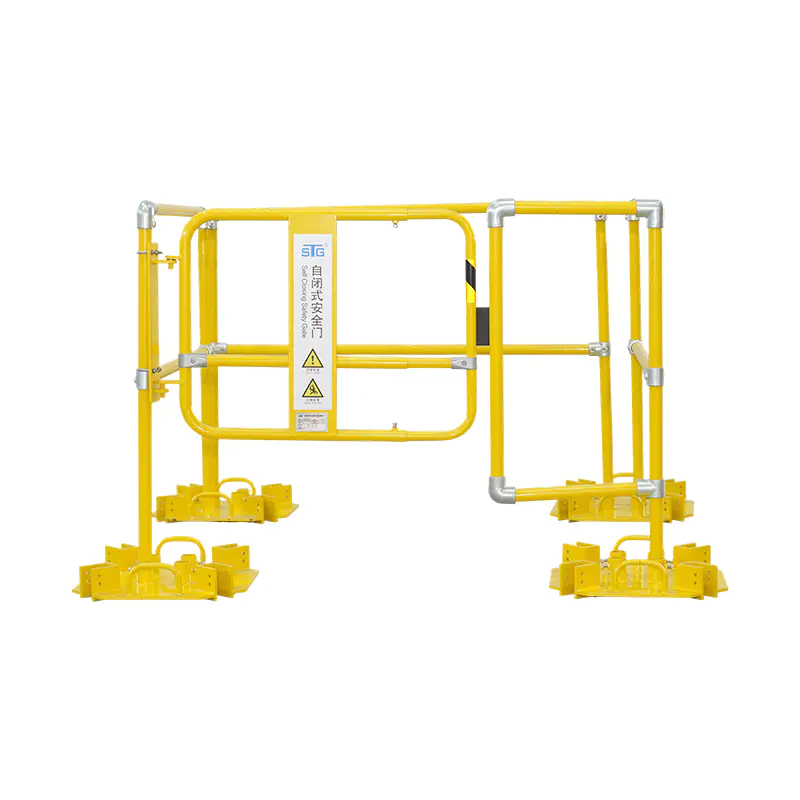
STG Detachable Guardrail for Industrial Applications
Yancheng STG Safety Equipment Co., Ltd. manufactures industrial safety equipment and provides detachable guardrail solutions for workplaces requiring flexible protective barriers.
According to the company's product information, its detachable guardrail features a modular connection design and locking mechanism. The system is intended for temporary or periodic isolation of hazardous areas, access points, and platform edges.
STG reports more than 20 years of manufacturing experience. Its products serve industries including petrochemicals, pharmaceuticals, electronics, laboratories, and industrial manufacturing. The company also reports ISO 9001, ISO 14001, and ISO 45001 certifications.
For projects requiring removable edge protection, the STG Detachable guardrail is worth considering. Buyers can provide platform drawings, required dimensions, opening positions, and installation conditions to discuss a suitable configuration with the manufacturer.
Product-specific dimensions, load test reports, and available mounting options should be confirmed directly with STG before ordering.
Frequently Asked Questions About Detachable Guardrails
What Is a Detachable Guardrail Used For
It provides removable edge protection around industrial platforms, mezzanines, maintenance areas, and access points where barrier arrangements may need to change.
What Is the Standard Guardrail Height
Under OSHA 1910.29 for general industry, the top rail is normally 42 inches, plus or minus 3 inches, above the walking-working surface.
How Much Load Must a Guardrail Withstand
The OSHA general industry requirement specifies 200 pounds for the top rail and 150 pounds for intermediate members. These are test-force requirements, not general working load ratings.
Does a Detachable Guardrail Need a Midrail
Intermediate protection is required under OSHA 1910.29 when there is no wall or parapet at least 21 inches high. A midrail, mesh, screen, or equivalent protection may be used when it meets the applicable requirements.
Can Detachable Guardrails Be Used on Mezzanines
Yes. They can be considered for mezzanine edges and designated access points, provided the complete installation meets the applicable safety and structural requirements.
What Information Is Needed for a Quotation
Provide the platform dimensions, required height, opening width, mounting surface, load requirements, operating environment, and expected removal frequency. Drawings and photographs are also helpful.
How Often Should the System Be Inspected
Inspect before initial use, after each reinstallation, following suspected impact, and whenever damage or loose connections are observed. Follow the manufacturer's instructions and workplace inspection procedures.
Technical References
The technical values in this article are based on the following published sources.
- OSHA 29 CFR 1910.29, Fall Protection Systems and Falling Object Protection. View official OSHA requirements.
- OSHA Technical Manual, Fall Protection and Guardrail Systems. View OSHA technical guidance.
- STG Detachable Guardrail Product Information. View official product page.
Regulatory requirements vary by country and application. Always confirm the applicable standards and product specifications before installation.