English
 Deutsch
 España
 Français
 Italia
 Русский
 عربي



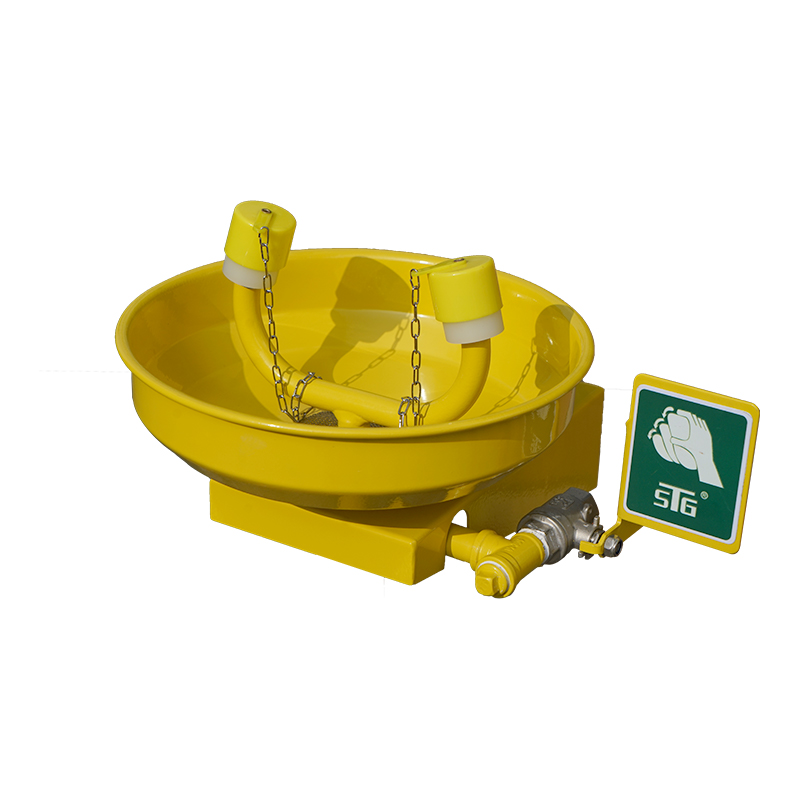
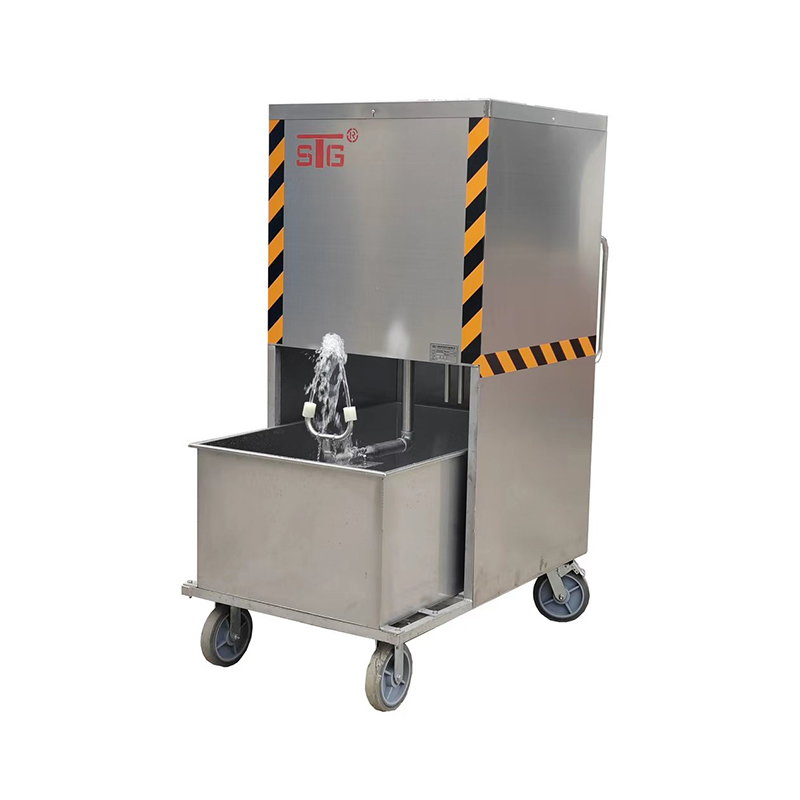
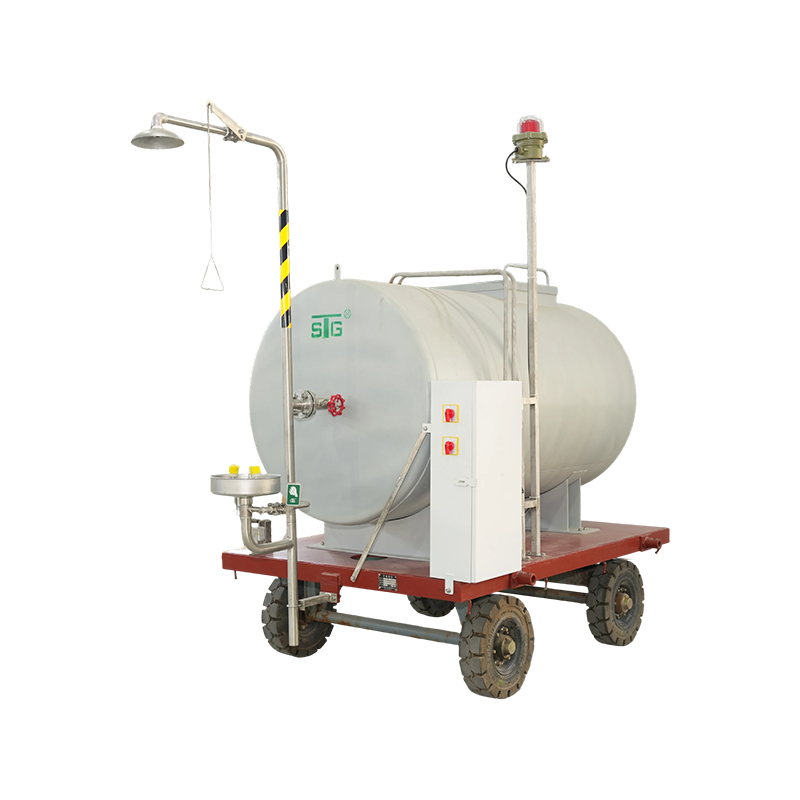
A tank-type station is the right choice when a plumbed water line is not available. To meet the widely used ANSI/ISEA Z358.1 standard, the unit must deliver at least 0.4 gallons per minute (1.5 L/min) to the eyes for 15 minutes and, for a shower, at least 20 gallons per minute (75.7 L/min) for 15 minutes. It must also be reachable within 10 seconds, roughly 55 feet (16.8 m), from the hazard, on the same level and with a clear path.
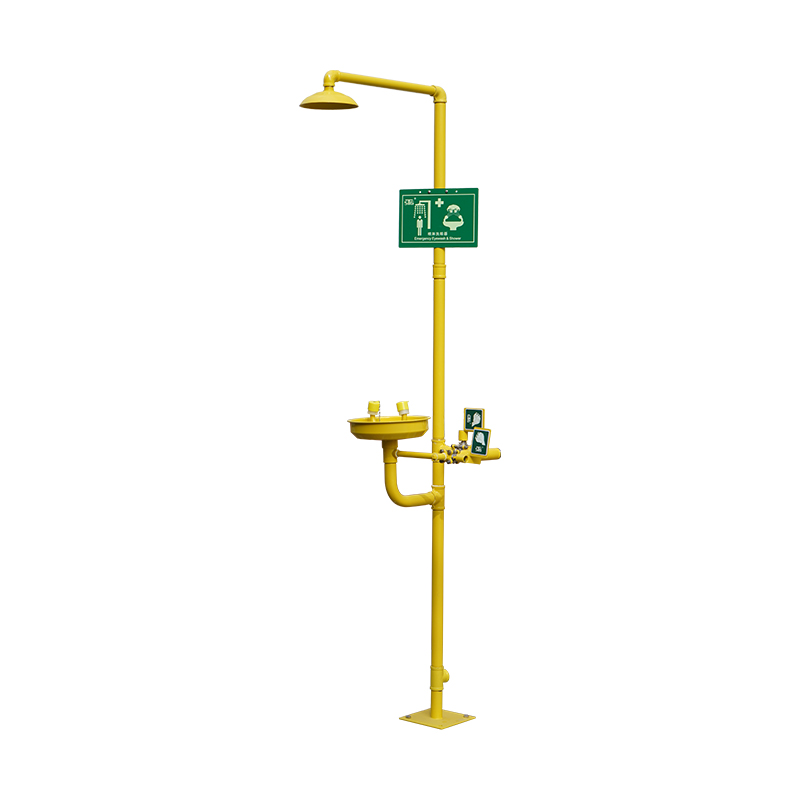
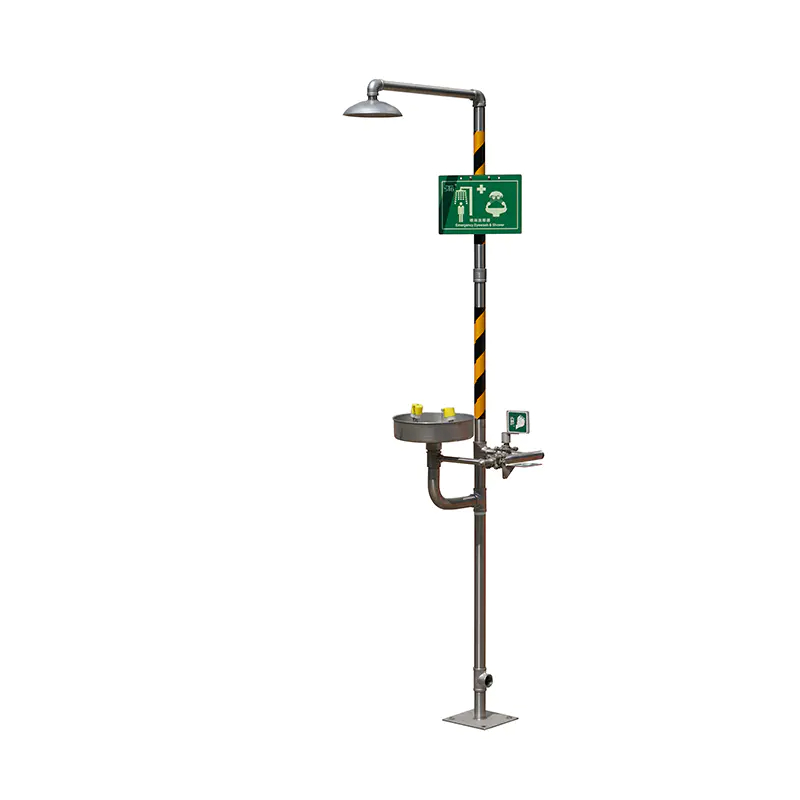
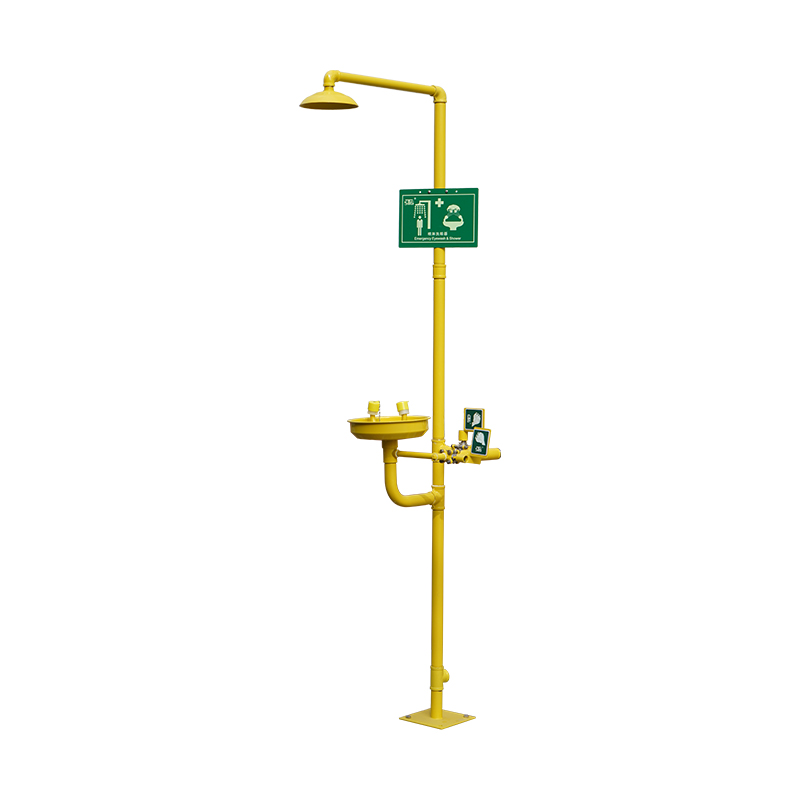
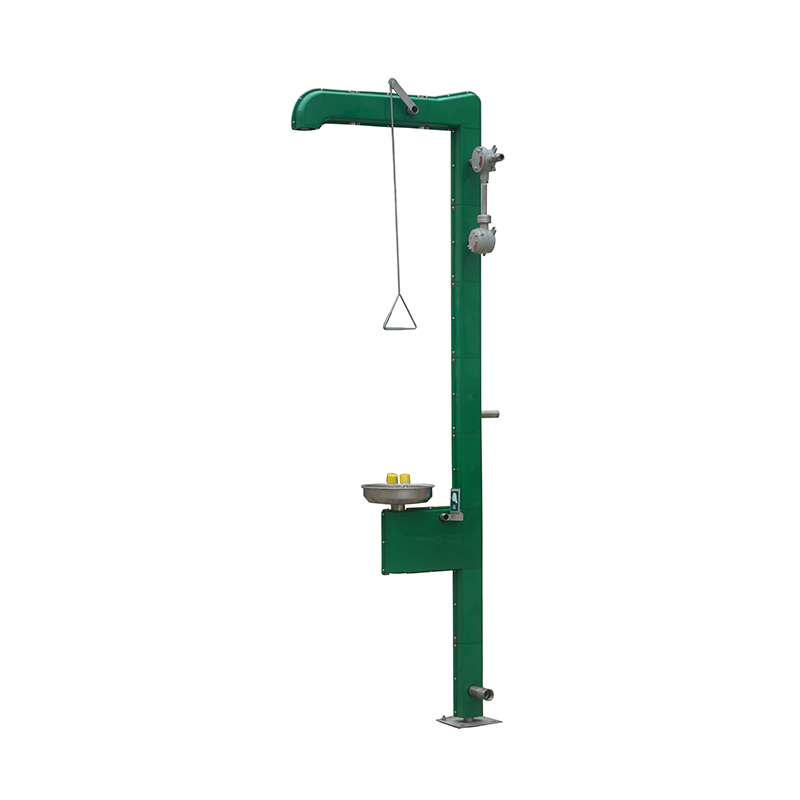
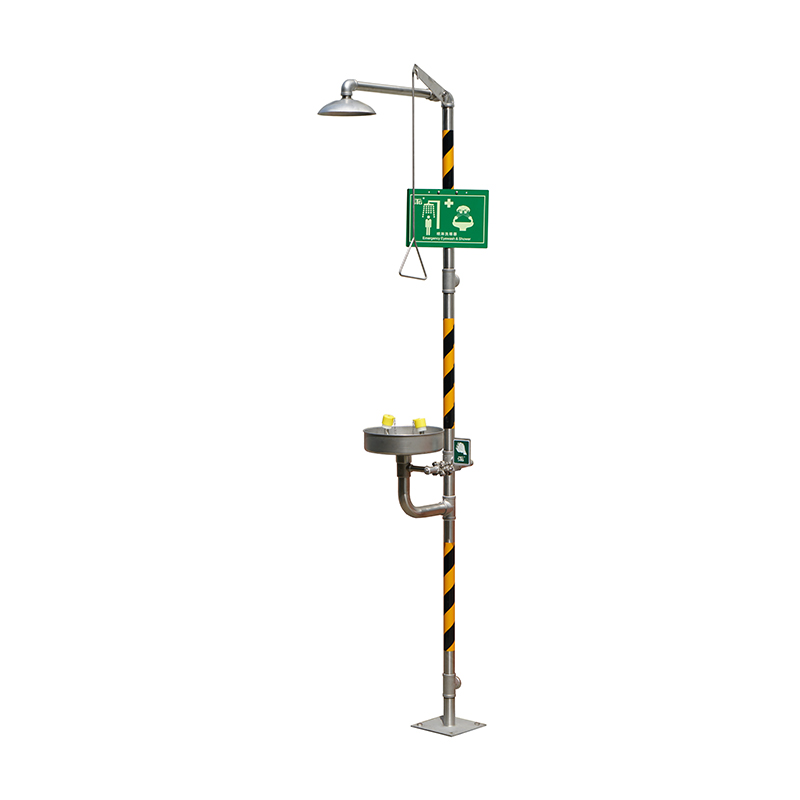
In practice, this means a compliant tank-type Emergency eyewash and shower needs a large water reservoir, tepid water, a hands-free valve and a location that no door, stair or machine blocks. The sections below explain how to calculate tank volume, choose the right position and compare options before you buy.
Figures in this guide follow ANSI/ISEA Z358.1-2014 and OSHA 29 CFR 1910.151(c). Always confirm against the latest edition of the standard and your local regulations.
What the Standards Require From an Emergency Eyewash and Shower
OSHA requires that where the eyes or body of any person may be exposed to injurious corrosive materials, suitable facilities for quick drenching or flushing must be provided within the work area (OSHA 29 CFR 1910.151(c); the construction equivalent is 29 CFR 1926.50(g)). OSHA does not publish detailed flow numbers itself and generally refers to ANSI/ISEA Z358.1 for technical performance.
| Requirement | Eyewash | Emergency Shower |
|---|---|---|
| Minimum flow rate | 0.4 gal/min (1.5 L/min) | 20 gal/min (75.7 L/min) |
| Minimum flushing time | 15 minutes | 15 minutes |
| Travel time from hazard | 10 seconds or less | 10 seconds or less |
| Water temperature | 60 to 100 degrees F (16 to 38 degrees C) | 60 to 100 degrees F (16 to 38 degrees C) |
| Valve operation | One second or less, stays open hands-free | One second or less, stays open hands-free |
Source: ANSI/ISEA Z358.1-2014, American National Standard for Emergency Eyewash and Shower Equipment, and OSHA 29 CFR 1910.151(c).
How to Size the Tank Volume
Tank sizing is simple multiplication: flow rate times 15 minutes. The result is the minimum usable water volume the tank must hold, not the nominal volume printed on the shell.
| Station Type | Calculation | Minimum Usable Water |
|---|---|---|
| Eyewash only | 0.4 gal/min x 15 min | 6 gallons (about 23 L) |
| Shower only | 20 gal/min x 15 min | 300 gallons (about 1,135 L) |
| Combination shower and eyewash | Both at once, 15 min | About 306 gallons (about 1,158 L) |
These calculations are our own arithmetic based on the ANSI/ISEA Z358.1-2014 flow rates above. Because a full-flow shower needs roughly 300 gallons, a compliant self-contained shower tank is physically large. Compact tank units are often designed for the eyewash function or for a reduced flushing duration, so check the product label and rated flushing time before relying on one for body drenching.
Ask the supplier for these three numbers
- Usable water capacity, not total tank volume
- Rated flow rate at the nozzle and at the shower head
- Rated flushing duration at that flow rate
When a Tank-Type Station Is the Better Choice
A plumbed unit is usually cheaper to operate, but it needs a supply line, a drain and often a tempering valve. A tank-type unit solves problems where those services are missing or unreliable.
- Remote or temporary sites: construction projects, mining, oil and gas pads and outdoor storage yards often have no nearby water main.
- Fast relocation: process areas that change layout can move a self-contained unit with a forklift or pallet jack.
- Backup coverage: a tank unit can supplement a plumbed station during maintenance shutdowns or water outages.
- Freeze-prone areas: insulated and heated tank models avoid long exposed pipe runs.
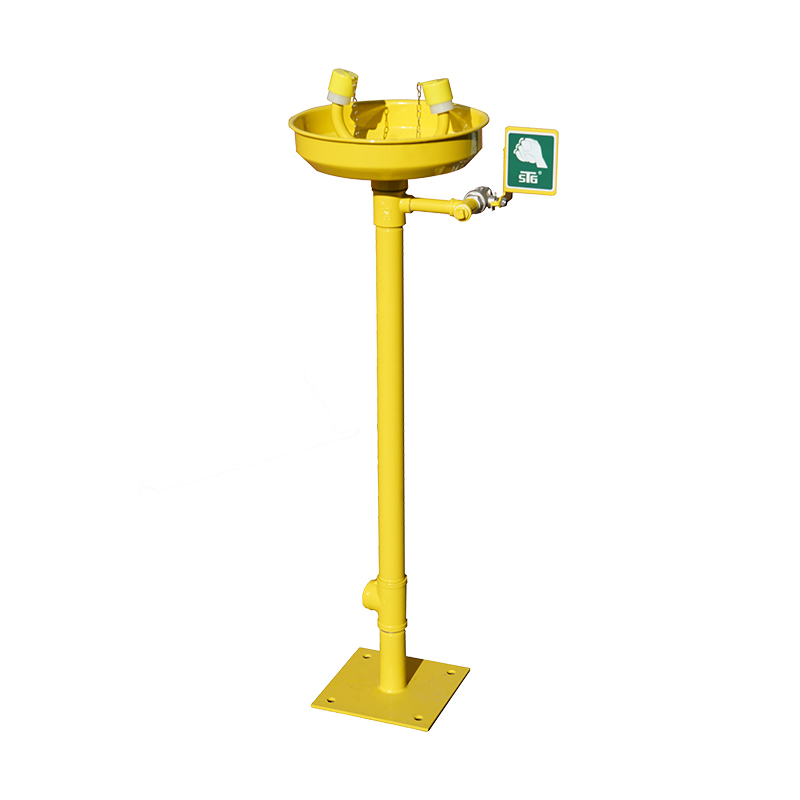
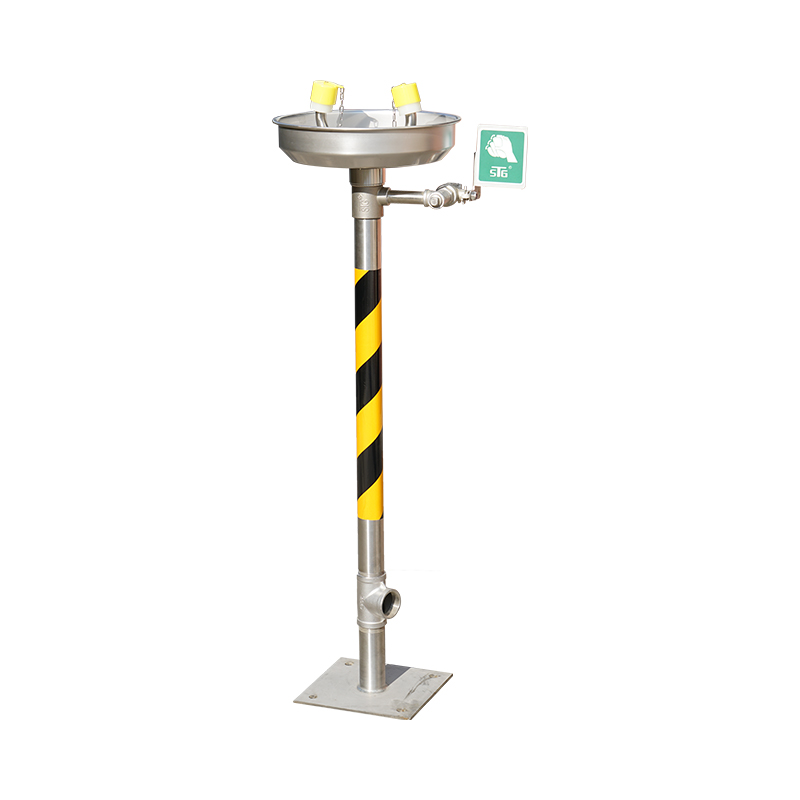
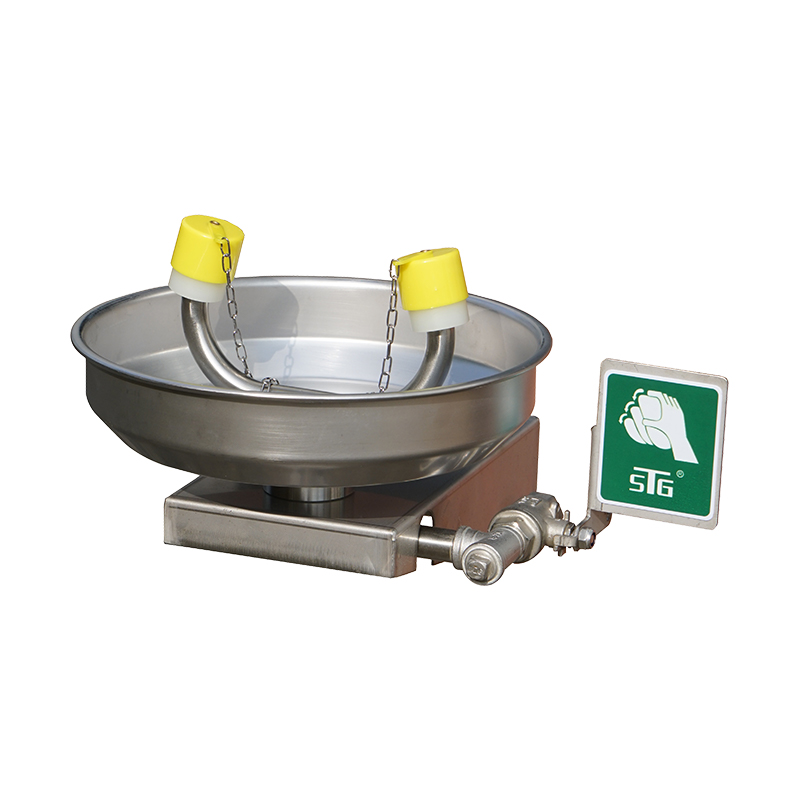
If your site has water and drainage available, compare both options. A tank-type Emergency eyewash and shower from STG can serve as the primary station where plumbing is impractical, or as a secondary unit where a plumbed station is too far from the hazard.
Placement Rules That Decide Whether the Station Works
A compliant station in the wrong location fails the worker who needs it. The 10-second rule, about 55 feet, is a maximum. For strong acids and caustics, place the station as close as practical to the hazard because injury progresses within seconds.
Installation dimensions from ANSI/ISEA Z358.1-2014
| Item | Typical Requirement |
|---|---|
| Shower head height | 82 to 96 inches (208 to 244 cm) above the floor |
| Shower spray pattern | About 20 inches (50.8 cm) diameter at 60 inches (152 cm) above the floor |
| Clearance from shower center | At least 16 inches (40.6 cm) in every direction |
| Eyewash nozzle height | 33 to 45 inches (83.8 to 114.3 cm) above the floor |
| Eyewash distance from wall | At least 6 inches (15.3 cm) from the nozzle to the wall |
Source: ANSI/ISEA Z358.1-2014. Check the current edition for exact values.
Location checklist
- Same floor level as the hazard, with no stairs, ramps or closed doors in the path
- Clear, well-lit approach with no pallets, carts or hoses stored in front
- Marked with a bright safety sign and, ideally, an overhead light or green floor marking
- Located along the normal exit route, in the direction a worker would run when blinded
- Away from electrical panels and equipment that cannot tolerate water spray
- On a stable, level surface with a slip-resistant area around the base
Water Temperature, Freezing and Tank Hygiene
Flushing must last 15 minutes, and cold water makes people leave early. ANSI/ISEA Z358.1-2014 defines tepid water as roughly 60 to 100 degrees F (16 to 38 degrees C). Water above about 100 degrees F can increase tissue injury, and very cold water causes people to stop flushing before the full period is complete.
Practical tank considerations
- Cold climates: choose an insulated tank with a thermostatic heater, or place the unit indoors. An unheated tank can freeze and fail.
- Hot climates: shade and insulation help keep stored water below the upper limit.
- Water quality: stored water can grow algae and bacteria. Follow the manufacturer's schedule for draining, cleaning and refilling, and use only approved preservatives.
- Materials: stainless steel, polyethylene and powder-coated steel each suit different environments. Choose corrosion-resistant materials in chemical plants and coastal sites.
Tank-Type Versus Plumbed Stations
| Factor | Tank-Type | Plumbed |
|---|---|---|
| Water supply needed | No, filled manually | Yes, permanent connection |
| Installation effort | Low, place and fill | Higher, piping and drain |
| Relocation | Easy | Difficult |
| Routine maintenance | Refill, clean and check water quality | Weekly activation to flush lines |
| Footprint | Larger, especially for showers | Smaller |
| Best for | Remote, temporary or backup use | Fixed facilities with water access |
ANSI/ISEA Z358.1-2014 calls for weekly activation of plumbed units to clear sediment and verify flow, and a formal inspection at least annually. Tank units follow the manufacturer's instructions for fluid change and inspection frequency.
Match the Station to Your Hazard Assessment
Start with a written hazard assessment. List every chemical, its form (liquid, powder, vapor), concentration and where it is handled. Safety data sheets, specifically Section 4 (first aid) and Section 8 (exposure controls), indicate whether flushing is required and for how long.
| Work Area | Typical Exposure | Suggested Station |
|---|---|---|
| Battery charging room | Sulfuric acid splash | Combination shower and eyewash near the door |
| Chemical transfer or drum filling | Caustics, solvents, acids | Combination unit within a few steps of the filling point |
| Laboratory | Small splashes to face and eyes | Eyewash at each bench zone, shower near exit |
| Construction and remote work | Concrete, cutting fluids, fuels | Portable tank-type unit within the work area |
| Water treatment | Chlorine, caustic soda, acids | Combination unit outside the chemical room |
The examples above are illustrative and based on common industrial hazards; your own assessment and local regulations decide the final selection.
Buying Checklist for an Emergency Eyewash and Shower
Use these points to compare quotes and avoid products that look compliant but underperform in an emergency.
- Confirm the unit is rated to ANSI/ISEA Z358.1 and ask for the test or compliance documentation
- Check usable capacity against the 6 gallon eyewash and 300 gallon shower calculations
- Verify that the eyewash and shower can operate at the same time if you need a combination unit
- Look for a stay-open valve that works in one second or less and can be found without sight
- Choose dust covers on nozzles that open automatically when the valve is activated
- Select materials suited to the chemicals, climate and washdown conditions on your site
- Confirm freeze protection or heating if the unit will sit outdoors in winter
- Check forklift pockets, anchoring options and the delivered weight when full
- Ask about replacement parts, refill hardware and written maintenance instructions
You can review the available configurations of our Emergency eyewash and shower range and compare capacity, materials and options against this list before requesting a quote.
Common Mistakes to Avoid
- Buying by tank size on the label: nominal volume is not the same as usable water, so ask for the rated flushing time.
- Placing the station behind a door: a closed door breaks the unobstructed path and slows access beyond 10 seconds.
- Using bottle-only eyewash as the sole protection: small personal wash bottles are a supplement and do not replace a 15-minute flushing station under ANSI/ISEA Z358.1.
- Ignoring temperature: frozen or overheated water makes a station unusable.
- No training: workers should know where the station is and how to hold their eyelids open while flushing.
Inspection, Training and Record Keeping
A station is only useful if it works and people know how to use it. Build a short routine and record it.
| Task | Frequency | Notes |
|---|---|---|
| Visual check of access, signage and covers | Weekly | Remove obstructions, confirm tank is full |
| Activate plumbed units | Weekly | Required by ANSI/ISEA Z358.1-2014 to flush lines |
| Water change and tank cleaning | Per manufacturer | Date the tag on each refill |
| Full performance inspection | At least annually | Flow, height, temperature and valve operation |
| Worker training | At hire and refresher | Include a walk to the station |
Attach an inspection tag to each unit with the date, inspector and result. If a unit fails any point, tag it out of service and provide a temporary alternative.
Frequently Asked Questions
How long should a person flush after a chemical splash?
ANSI/ISEA Z358.1-2014 specifies 15 minutes of flushing capability. Some chemicals require longer flushing, so follow the safety data sheet and seek medical attention after any exposure.
Can one tank-type station cover a whole plant?
No. The 10-second travel time applies to each hazard location, so a large site usually needs several stations placed close to separate hazards.
Is an eyewash enough, or do I also need a shower?
If chemicals can contact the body or clothing, add a shower. If the risk is limited to eye splash, an eyewash may be enough. Your hazard assessment decides.
Do I need a drain for a tank-type station?
The unit holds a large volume of water, so plan where discharged water will go. A drain, floor slope or containment area helps keep the zone safe and non-slip.
Conclusion: Choose by Volume, Distance and Maintenance
For a tank-type station, work through four points: calculate usable volume for 15 minutes of flow, keep the unit within 10 seconds of the hazard, protect the water from heat and freezing, and schedule regular inspection. Together these ensure the equipment performs when a splash happens.
To compare capacities, materials and configurations for your site, see our Emergency eyewash and shower options and match them against your hazard assessment.
Sources
- ANSI/ISEA Z358.1-2014, American National Standard for Emergency Eyewash and Shower Equipment, International Safety Equipment Association
- OSHA 29 CFR 1910.151(c), Medical services and first aid, Occupational Safety and Health Administration
- OSHA 29 CFR 1926.50(g), Medical services and first aid (construction), Occupational Safety and Health Administration