English
 Deutsch
 España
 Français
 Italia
 Русский
 عربي



A detachable guardrail system provides flexible protection for platforms, elevated work areas, machine access points, and other locations where a permanent barrier may restrict daily operations. It allows designated barrier sections to be removed when access is required and reinstalled after the work is completed.
When selecting a Detachable guardrail, buyers should focus on the application, installation structure, connection design, locking mechanism, dimensions, and applicable safety requirements. These factors determine whether the system is suitable for the working environment and can be installed and maintained correctly.
For European projects, CE certification and relevant European standards should also be considered. Yancheng STG Safety Equipment Co., Ltd. provides CE-certified detachable guardrail products. Buyers should review the relevant product documentation to confirm the certification scope and applicable requirements for their intended installation.
What Is a Detachable Guardrail
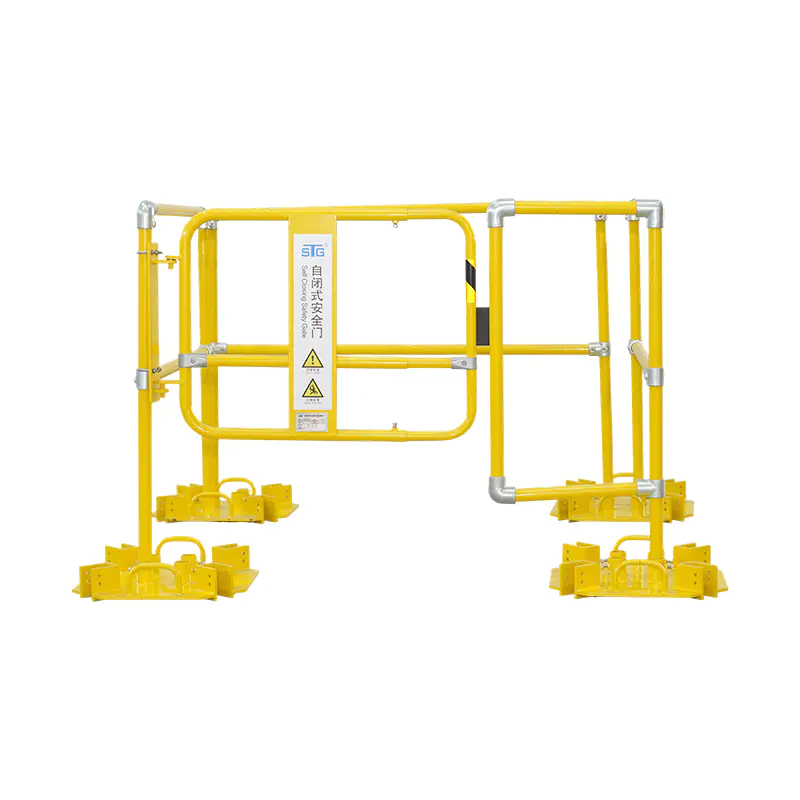
A detachable guardrail is a removable safety barrier designed to protect exposed edges or restrict access to designated areas. Unlike a permanently fixed barrier, it uses a detachable connection arrangement that allows selected sections to be removed when necessary.
A typical system may include guardrail sections, supporting posts, mounting brackets, connection components, and locking devices. The exact configuration depends on the product design and installation requirements.
Main Components
- Guardrail sections: Form the protective barrier along the platform or restricted area.
- Support posts: Hold the rails in position and transfer applied forces to the supporting structure.
- Mounting brackets: Connect the system to the floor, platform, frame, or other approved structure.
- Locking components: Secure detachable sections and help prevent unintended movement or separation.
The main advantage of this design is access flexibility. For example, a maintenance team may need to remove a section to reach a machine component. After the maintenance work is finished, the section can be reinstalled to restore the protective boundary.
Common Applications of Detachable Guardrails
Detachable guardrails are suitable for working environments where protection is necessary but access requirements change periodically. The final product configuration should always match the actual hazards and supporting structure.
Industrial Platforms and Elevated Work Areas
Production facilities often have elevated platforms for equipment operation, inspection, and maintenance. Guardrails help separate workers from exposed edges. Where large components or materials need to pass through a platform boundary, a removable section may provide a more practical access arrangement.
Machinery Maintenance Areas
Some machines require regular access to motors, drive systems, inspection points, and service components. A detachable guardrail can make selected areas easier to access without permanently removing the surrounding protection. The opening should be controlled, and the barrier should be restored after maintenance.
Loading and Material Transfer Areas
Warehouses and industrial facilities may have raised loading platforms or material transfer points. A detachable section can provide access when equipment or materials need to pass through. The opening must be managed carefully to prevent workers from approaching an unprotected edge during operations.
Construction and Building Maintenance
Temporary edge protection is used on construction sites and during building maintenance to reduce fall risks around roofs, floors, and other exposed edges. Buyers should confirm whether the selected system is designed for temporary construction protection or for another industrial application, as the applicable technical requirements may differ.
Key Factors When Selecting a Detachable Guardrail
Choosing a suitable system requires more than checking the overall dimensions. The product should match the installation location, expected use, and required protection level.
Application and Safety Requirements
First, identify the purpose of the guardrail. A barrier for a machine maintenance platform may have different requirements from one used for temporary construction edge protection. Consider whether the system is intended to prevent falls, restrict access, or separate workers from equipment.
Installation Surface and Mounting Method
The supporting structure directly affects the stability of the complete system. Check whether the guardrail will be installed on concrete, a steel platform, a machine frame, or another surface. The material, thickness, condition, and available fixing locations should be confirmed before selecting the mounting method.
Do not install a guardrail on a weak or damaged surface simply because the mounting components fit. Where the structural capacity is uncertain, obtain an assessment from a competent engineer.
Dimensions and Barrier Layout
Measure the required height, total length, platform dimensions, and access openings. Identify corners, changes in direction, stairs, and areas where equipment needs to pass through. A layout drawing can help determine the number and position of posts and removable sections.
Connection and Locking Design
The connection system should be suitable for the intended application and should keep the barrier securely in place during use. Check how each section is attached, how the locking mechanism works, and whether removal requires specific tools or procedures.
- Confirm that the connection components fit the approved installation arrangement.
- Check that locking devices can be fully engaged and inspected.
- Confirm that replacement components are compatible with the original system.
- Avoid modifying brackets, fasteners, or locking components without technical approval.
Material and Environmental Conditions
Material and surface finish should be selected according to the working environment. Outdoor installations may face moisture, temperature changes, and corrosion exposure, while industrial facilities may involve cleaning chemicals, abrasion, or accidental impact. Ask the manufacturer to confirm the available material and finish options for the project.
European Standards and CE Certification
For buyers in European markets, it is important to understand the difference between CE marking and compliance with a particular technical standard. CE marking relates to the applicable European Union legislation and the conformity information declared for the product. It does not automatically mean that a product meets every European safety standard or is suitable for every application.
STG provides CE-certified detachable guardrail products. Buyers should request the relevant documentation and check that the certificate or declaration applies to the specific product model and intended use.
EN 13374 for Temporary Edge Protection
EN 13374 covers temporary edge protection systems used during construction or maintenance of buildings and other structures. It specifies product requirements and test methods for three classes of temporary edge protection. The appropriate class depends on the working conditions and protection requirements.
This standard may be relevant when a detachable guardrail is designed as a temporary construction edge protection system. However, EN 13374 does not cover every type of industrial guardrail. Its scope excludes certain applications, including protection against impact from vehicles or other mobile equipment and protection of areas accessible to the public.
Reference: EN 13374:2025 - Temporary edge protection systems.
EN ISO 14122-3 for Machinery Access Guardrails
EN ISO 14122-3 addresses stairs, stepladders, and guardrails used as part of permanent means of access to machinery. It also covers certain adjustable or movable components of fixed access arrangements. This standard may be a useful reference for guardrails installed around machinery platforms and service access areas.
It should not be assumed to apply to every removable barrier. Buyers should confirm whether the guardrail forms part of a machinery access arrangement and check the standard's scope against the actual installation.
Reference: EN ISO 14122-3:2016 - Safety of machinery.
Documents Buyers Should Request
- CE certificate or other applicable conformity documentation.
- Declaration of conformity or declaration of performance, where applicable.
- Product specifications and the exact model covered by the documents.
- Applicable standards or technical specifications.
- Installation instructions and permitted mounting configurations.
- Relevant test reports and maintenance recommendations.
Reviewing these documents helps buyers determine whether the product is appropriate for the project. The applicable legislation and conformity route should be confirmed according to the product category and intended use.
Installation and Removal Procedures
Correct installation is essential to guardrail performance. The following steps provide general guidance. The actual procedure should follow the manufacturer's instructions and the site's risk assessment.
Prepare the Installation Area
Measure the platform and identify exposed edges, access points, nearby equipment, and possible installation restrictions. Inspect the supporting structure for cracks, corrosion, deformation, or other visible damage. Confirm that the proposed mounting locations are suitable.
Check Components and Mounting Points
Compare the supplied parts with the installation drawing. Check the rails, posts, brackets, fasteners, and locking components for missing parts or visible damage. Mark the mounting positions before installing the system.
Install and Secure the Guardrail
Fit the mounting components according to the manufacturer's instructions. Install the posts and connect the guardrail sections in the specified order. Make sure the barrier forms the required protective boundary and that all connections are properly engaged.
Inspect Before Use
- Check that all required sections are installed.
- Confirm that locking components are fully engaged.
- Inspect mounting points and fasteners for looseness or damage.
- Check for unintended gaps or openings.
- Confirm that the installation does not interfere with machinery or create additional hazards.
Remove and Reinstall Safely
Before removing a section, restrict access to the affected area and determine whether alternative protection is required. Only trained personnel should operate the release mechanism. Follow the specified removal sequence and store the removed components in a designated location.
After the work is completed, reinstall the section and check every connection before allowing normal access. Never assume that a barrier is secure simply because it appears to be in its original position.
Inspection and Maintenance
Regular inspection helps identify damage and wear before they affect the protective function of the guardrail. Inspection frequency should follow the manufacturer's recommendations and the site's risk assessment. Systems exposed to frequent removal, harsh weather, or accidental impact may require more frequent checks.
Inspect Rails and Posts
Look for bending, cracks, deformation, corrosion, and damaged surface finishes. Components with visible structural damage should not be returned to service without an approved repair or replacement procedure.
Check Connections and Locking Devices
Inspect brackets, anchors, bolts, pins, and locking components for looseness, wear, or deformation. Confirm that detachable sections can be secured correctly. Replace damaged parts with compatible components approved for the system.
Keep Inspection Records
Record inspection dates, identified defects, repairs, and replaced components. These records are particularly useful in facilities where guardrail sections are frequently removed and reinstalled.
Detachable Guardrail vs Fixed Guardrail
Both systems provide physical protection around exposed edges, but they serve different access requirements. The main consideration is whether the protected area needs to be opened periodically.
| Comparison | Detachable Guardrail | Fixed Guardrail |
|---|---|---|
| Connection | Designed for removal and reinstallation. | Generally installed as a permanent barrier. |
| Access flexibility | Selected sections can be removed when required. | Usually remains in place during normal operation. |
| Maintenance access | Can provide access to selected equipment or platform areas. | May require a separate access arrangement. |
| Inspection focus | Removable joints, locking devices, and mounting points. | Permanent fixings and structural connections. |
| Typical use | Areas with changing access requirements. | Areas where the protected boundary rarely changes. |
A detachable system is not automatically the best choice for every project. If the area does not require regular access, a fixed guardrail may be more practical. If workers need to access equipment or move materials through the protected boundary, a suitable detachable arrangement may offer greater flexibility.
Frequently Asked Questions
What is the main purpose of a detachable guardrail
It provides a removable barrier around exposed edges, platforms, or restricted work areas. It is useful where protection is needed but occasional access must also be provided.
Where are detachable guardrails commonly used
Common applications include industrial platforms, machinery maintenance areas, loading points, service access openings, and selected construction or maintenance projects.
What should I check before purchasing
Check the application, dimensions, mounting structure, connection method, locking mechanism, material, environmental conditions, and applicable safety requirements. Request the relevant technical documents before confirming the order.
Does CE marking mean a guardrail is suitable for every application
No. CE marking relates to the applicable European legislation and the conformity information declared for the product. Buyers must still confirm the product's intended use, technical documentation, and suitability for the installation.
What is the difference between EN 13374 and EN ISO 14122-3
EN 13374 covers temporary edge protection systems used during construction or maintenance of buildings and other structures. EN ISO 14122-3 addresses guardrails associated with permanent means of access to machinery. The correct reference depends on the application.
How often should detachable guardrails be inspected
Inspection frequency should follow the manufacturer's instructions and the site's risk assessment. Check rails, posts, mounting points, fasteners, and locking components regularly, especially after removal, reinstallation, or accidental impact.
What information is needed for a customized guardrail
Provide platform drawings, installation dimensions, mounting surface details, required removable sections, operating conditions, applicable project requirements, and estimated quantities. Site photographs can also help clarify the installation conditions.
Conclusion
A suitable detachable guardrail system should match the working environment, installation structure, and access requirements. Buyers should pay particular attention to mounting stability, connection design, locking security, and ease of inspection.
For European projects, EN 13374 and EN ISO 14122-3 may be relevant to different applications, but their scopes should be checked before specifying a product. CE-related documentation should also be reviewed to confirm the applicable requirements and product coverage.
By preparing accurate project dimensions, drawings, and installation details, buyers can work with the manufacturer to select a suitable configuration. Correct installation, controlled removal, and regular inspection help maintain the protective function of the system.